
Ben Chan, Consultant AI & Innovation Solutions, Bond
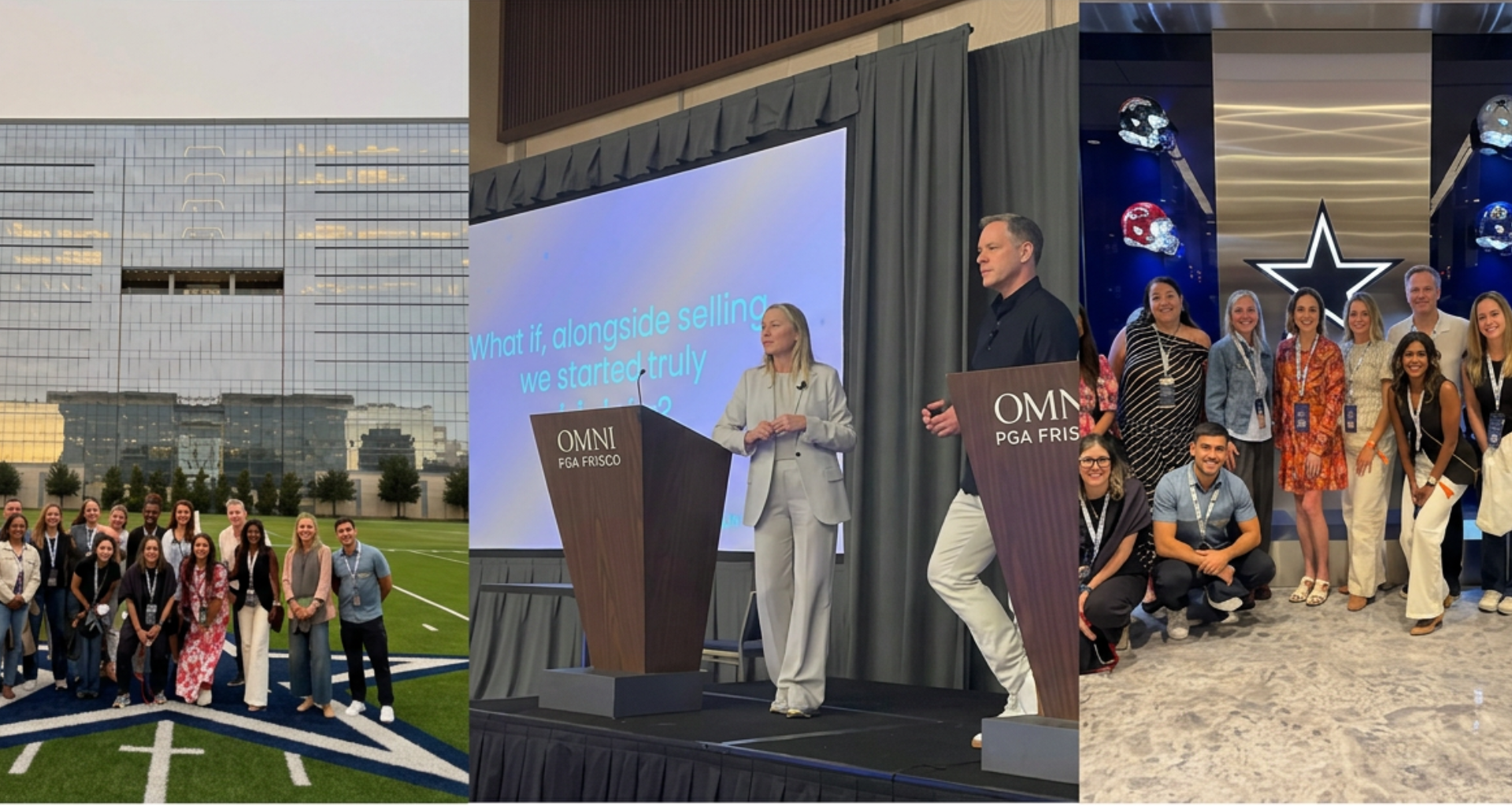
The Dallas Cowboys’ locker room turns out to be a fine place to talk customer strategy, which is roughly what we did at CRMC this year while hosting a few clients for dinner and a tour of The Star. The week itself, hosted by the Omni PGA Frisco (thanks team), drew the usual crowd of peers and leaders from some of the most influential brands on the planet.
The key takeaway from discussions and the conference this year? The job just got harder in three connected ways:
- The bars that customers set keep rising,
- Proof points demonstrating that your brands’ efforts are working keep getting harder to measure,
- The territory that you cover while doing both keeps expanding.
The bar keeps rising
The expectations customers have of a brand are no longer set by other brands. They are set by Amazon putting a box on the porch the next morning, by a TikTok feed that reads them better than their friends do, and by Spotify Wrapped turning a year of listening into a story about who they are. These personal experiences are the new standard. By the time a customer reaches your program, your email, or your store, they are measuring you against the best digital experience that they’ve ever had, and most brands are losing that comparison.
Customers are also spread thinner than ever. They are joining more programs but staying active in fewer; a membership signup says almost nothing about whether you actually have their attention, and attention does not imply affinity—a gap we dig into within our 2026 Bond Loyalty Report.
You cannot close that gap by adding more mechanics. Earn rates and tiers are table stakes now. The brands keeping pace did the harder thing and built an emotional connection. On the mainstage, the brand, At Home, put it plainly: CRM is dating, loyalty is marriage, with the ultimate goal being to build relationships, not programs. Their old approach had produced a wait-shop-drop pattern, where a discount spiked engagement and then customers drifted, because a transaction every few months was never a relationship. J. Crew pulled points out of its core program entirely, betting that the brand was the thing customers actually showed up for.
Emotional connection is the outcome that brands are orienting their strategies towards. Placing structure around that connection is what our Emotional Loyalty Framework is built for, which Forrester scored five out of five.
The proof bar went up
Here is the catch with chasing something like emotion: you still have to put a number on it, and the person asking for that number is, increasingly, the CFO. The version of that question we kept hearing was loyalty incrementality. Loyalty penetration within big brands is now so high—often 80% to 90% of demand already running through the program—that the program no longer wins for simply being there. It must prove it drives positive behavior amongst members. How much of this behavior is actually being driven by the program, versus how much is it labeling behavior that was going to happen anyway?
That’s a much harder thing to prove than a single campaign, and almost nobody had a clean answer. A program that’s been live for years across most of your base doesn’t leave you a control group. The teams making real progress were building the best case they could out of imperfect pieces, synthetic controls, pre- and post-reads, holdout groups (*) where the design allowed.
Measurement didn’t suddenly come back into fashion. The point is harsher: the softer the signal you chase, the harder you must prove that it paid off. Emotional connection with no incrementality behind it is just a more expensive way to lose your budget.
*Control groups that are not prescribed loyalty in order to measure true loyalty incrementality.
The territory keeps widening
The third shift was the easiest to spot and the hardest to plan for. Read the badges. Titles are getting longer, and the person who owned loyalty two years ago now owns CRM, retail media, and is expected to have a point of view on all of it.
You could see it in the range of what people wanted to talk to us about. The same individual asking how to fold competitive spend into their LTV model was, in the next breath, asking about the dynamic email activation work we’d just presented on stage with Disney. Two years ago, those were two different people in two different departments. Now, it’s one person, with one mandate, expected to be fluent in both. Work that used to sit across three teams is converging onto one desk.
Retail media was the clearest example of the sprawl. A few years ago, it barely came up at a loyalty conference. This year, it kept surfacing in loyalty conversations, because the first-party data that powers a loyalty program is the same asset that a retail media network runs on. The person who built the data foundation is now expected to monetize it, too. The skill set didn’t widen gradually. It got a new pillar bolted on, and the org chart mostly hasn’t caught up. One person holds the remit while the company still funds and measures it as if it were three.
That convergence is why the incrementality pressure bites so hard. The demand to prove your worth no longer stops at the loyalty program. It covers every adjacent function you’ve quietly absorbed. More ground to patrol, the same headcount, and a finance partner who wants each piece justified on its own.
Where that leaves us
Put the three together and the picture is uncomfortable, but clarifying: customers expect more, the proof you owe finance is steeper, and the ground you cover keeps expanding. The brands that handled all three at once were not the ones with the flashiest technology on stage; they were the ones who knew exactly which emotional driver they were designing for and could justify the math when finance asked.
That intersection, designing for the relationship and proving it pays, is most of what we do at Bond. If your remit just got wider and questions from finance just got sharper, connect with us here—we’d love to help.



Get insights.
You will receive emails from Bond, including updates and relevant content. You can unsubscribe at any time.