

Salesforce’s acquisition of Braze naturally raises a question for many: does one platform eventually replace the other? But there may be an even more important question for customers: can Salesforce connect the strengths of Braze, Marketing Cloud, and Data 360 without forcing customers into a single technology model?
An even more urgent question, still, is: do you know what your current marketing technology footprint costs, and what it provably delivers? That baseline—not the acquisition itself—will determine whether this deal becomes an opportunity or a renewal-table disadvantage.
That distinction matters because Braze and Salesforce Marketing Cloud Engagement have historically solved customer engagement differently.
Marketing Cloud Engagement has been extraordinarily flexible in how marketers work across data, automation, segmentation, and communications. Braze has built its strength around customer profiles, behavioral signals, and acting while an interaction is still relevant.
Consider an example: a customer abandons their cart mid-session. Braze excels at recognizing that signal and acting on it in the moment, perhaps with an in-app message or push notification while intent is still high. Marketing Cloud Engagement excels at the longer arc: the orchestrated lifecycle journey that follows if that customer goes quiet, woven across email, advertising, and service touchpoints; this is all informed by their full relationship history. One platform is built for the moment; the other for the journey.
Neither approach is inherently better. They are optimized for different needs, and that may be precisely where the opportunity lies.
The Customer Opportunity
The most compelling outcome is not Salesforce simply absorbing Braze into an existing product. It’s Salesforce making it easier for customers to connect through:
- Enterprise customer data and intelligence;
- Real-time behavioral signals and decisioning;
- Marketing automation and orchestration;
- And the channels where customers actually interact with the brand.
If Salesforce can do that while preserving meaningful customer choice, brands gain a more direct path from data → insight → decision → action without rebuilding their existing marketing technology environment.
The implications, though, look different depending on where you sit within an organization.
For the Marketer: Greater Speed and Relevance
The question for marketing leaders is not which logo wins—it’s whether their teams can recognize what a customer is doing, understand that customer in context, and act on that signal quickly enough to influence the experience.
Braze has historically been strong at proximity to digital behavior and timely engagement. Salesforce brings a broader data, CRM, AI, commerce, service, loyalty, and orchestration ecosystem. Connected effectively, those capabilities give marketers more ways to move from traditional campaign execution toward continuously informed customer engagement.
The opportunity becomes this: more relevant interactions with less friction between data and activation.
For the CFO: Prove The Economics
This acquisition also creates a financial question and, in our view, the most time-sensitive one.
Consolidation can simplify vendors and reduce operational complexity, but it also shifts pricing power, competitive tension, licensing structures, and renewal leverage. When two vendors that you could previously play against each other become one, your negotiating position changes on the day the deal closes, not the day the products merge. That makes the business case increasingly important.
Customers should know what their current marketing technology footprint costs, what outcomes it produces, and which capabilities actually contribute to incremental revenue, retention, frequency, margin, or customer lifetime value.
Bond’s recommendation is unambiguous: build that baseline now, before your next renewal conversation, not after Salesforce presents the new packaging.
The question shouldn’t simply be: “what will the new platform cost?” It should be: “what additional economic outcome are we buying, and can we prove it?”
For the CIO: Preserve Optionality
For technology leaders, the acquisition should not automatically trigger a migration or architecture decision. Most enterprises already have significant investments across customer data, CRM, loyalty, commerce, marketing, integration, analytics, and digital experience. The objective should be to determine where Salesforce and Braze add differentiated value without unnecessarily replacing systems that already work.
The strongest future-state architecture may predominantly be Salesforce. It may retain Braze as an engagement layer; or it may include both alongside other platforms. The right answer depends on the business use cases.
A well-designed customer engagement ecosystem should allow the enterprise to change channels, decisioning technologies, data sources, or activation platforms without having to reconstruct the entire customer experience every time the technology landscape changes.
This Does Not Have to Be Winner-Takes-All
Marketing Cloud Next (Salesforce’s AI-first rebuild of its marketing platform) remains central to its marketing strategy. Braze brings a distinct engagement model and customer base. Data 360, Salesforce’s unified customer data platform, provides the data foundation that could tie them together.
Those capabilities will inevitably overlap in places. The strategic opportunity is in how Salesforce connects them, and whether customers retain genuine choice in how they assemble data, intelligence, orchestration, and engagement.
However, there are still important unknowns: product roadmaps, integration, packaging, pricing, commercial terms, and how much independence Braze retains. For customers, that means this is not the moment for a reflexive technology decision; it is the moment to establish clarity.
What Brands Should Be Doing Now
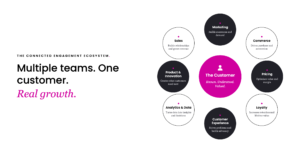
At Bond, we believe companies should use this moment to answer four things:
- What customer behaviors are we trying to change?
- Which of our current use cases depend on capabilities that are genuinely distinct to Braze or to Marketing Cloud, and which could run on either?
- Where does our current architecture help or constrain us?
- What are we paying for those outcomes today, line by line, across both platforms?
That creates a baseline against which future Salesforce and Braze product decisions, roadmap changes, and renewal proposals can be evaluated. It also changes the conversation from platform versus platform to something much more valuable: what combination of data, intelligence, decisioning, and engagement creates the greatest customer and economic value for our business?
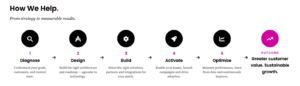
That is familiar territory for Bond. Our role is not to begin with a predetermined technology answer. We help organizations connect customer strategy, behavioral insight, economics, architecture, and activation to determine the right capabilities (and the right technology footprint) to deliver the desired outcome.
This acquisition creates an important reason to revisit that equation. It does not create a reason to abandon it.
The Question We’d Raise to Leadership
Would it be valuable to bring your Marketing, Finance, and Technology leaders together for a focused working session to identify the customer experiences that matter most, quantify the economics behind them, and determine what your future Salesforce and Braze footprint should actually enable, before the first renewal proposal arrives?
Bond helps brands connect customer strategy, behavioral insight, and architecture to get ahead of moments exactly like this one. If the Salesforce x Braze acquisition impacts your roadmap, your renewal, or your current customer experience, we’d be happy to chat.



Get insights.
You will receive emails from Bond, including updates and relevant content. You can unsubscribe at any time.