

Broadway Bank, a Texas institution rooted in San Antonio, wanted to expand its footprint. But while Texans love to “shop local,” their banking choices told a different story — loyalty to national chains over community institutions.

New Challenger.
Elevated Broadway from a small regional bank to a bold challenger brand.

Source of Pride.
A campaign that resonated beyond product features, embedding Broadway in the conversation about what it means to “shop local.”

Increased Engagement.
Increased consideration and customer acquisition in competitive markets
Texans talk about shopping local, but they weren’t banking local
Broadway Bank faced a paradox: despite being woven into the fabric of San Antonio since its founding, consumers defaulted to “big banks” when it came to their money. Banking decisions were driven by habit and perception of scale, not by loyalty to community.
To grow, Broadway needed more than awareness — it needed a rallying cry that reframed local banking as an act of pride, identity, and independence.
“Don’t bank their way. Bank the Broadway,” became a bold call to action that turned local pride into local banking.
Bond partnered with Broadway to design a campaign that directly challenged the status quo. Instead of blending into generic “bank local” messages, the idea was unapologetic: stop following big banks, start backing your own.
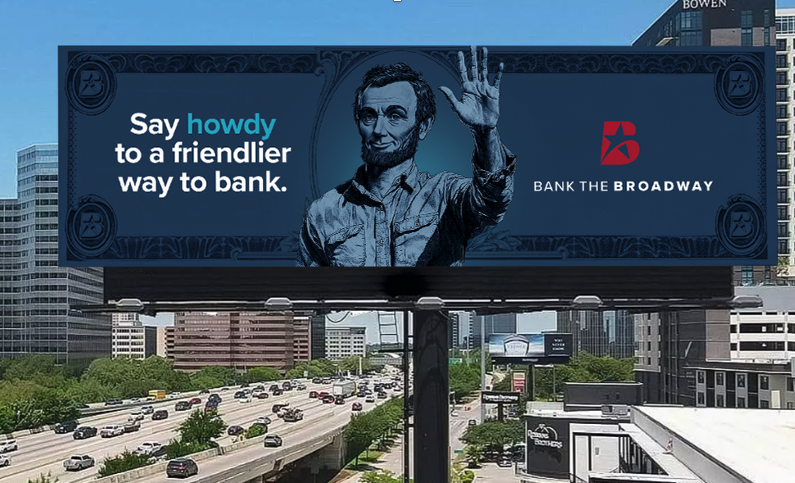
Our approach included:
- Brand positioning: Established Broadway as the authentic alternative to faceless national chains.
- Messaging framework: Made “Bank the Broadway” a rallying cry, tying financial choices to Texan independence and local pride.
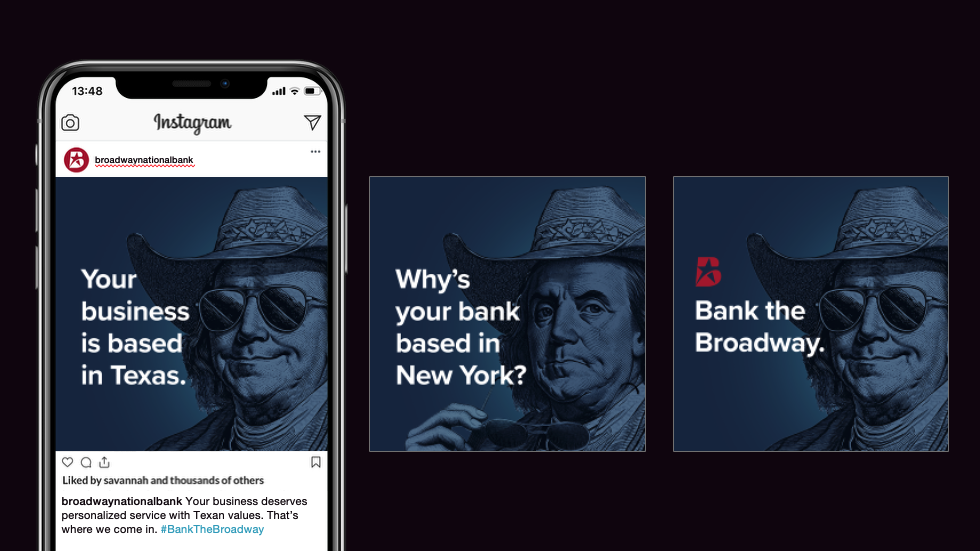
- Creative campaign: Striking visuals and bold headlines sparked conversation, making Broadway feel bigger than its footprint.

From regional bank to cultural challenger
The repositioning transformed Broadway’s role in the market. Instead of being seen as a quiet regional player, Broadway emerged as a bold challenger brand. Consideration increased across key markets as the campaign pushed consumers to re-evaluate their banking choices.
More importantly, Broadway became part of a broader cultural conversation. By embedding itself in the “shop local” narrative, the bank stopped competing on functional attributes like rates or convenience and began to compete on cultural resonance.
Broadway’s transformation demonstrates the power of reframing. By turning community banking into an act of cultural loyalty, the bank transcended the limits of being a functional financial service provider. It became a love letter to Texas itself — bold, independent, and deeply local.



Get insights.
You will receive emails from Bond, including updates and relevant content. You can unsubscribe at any time.